
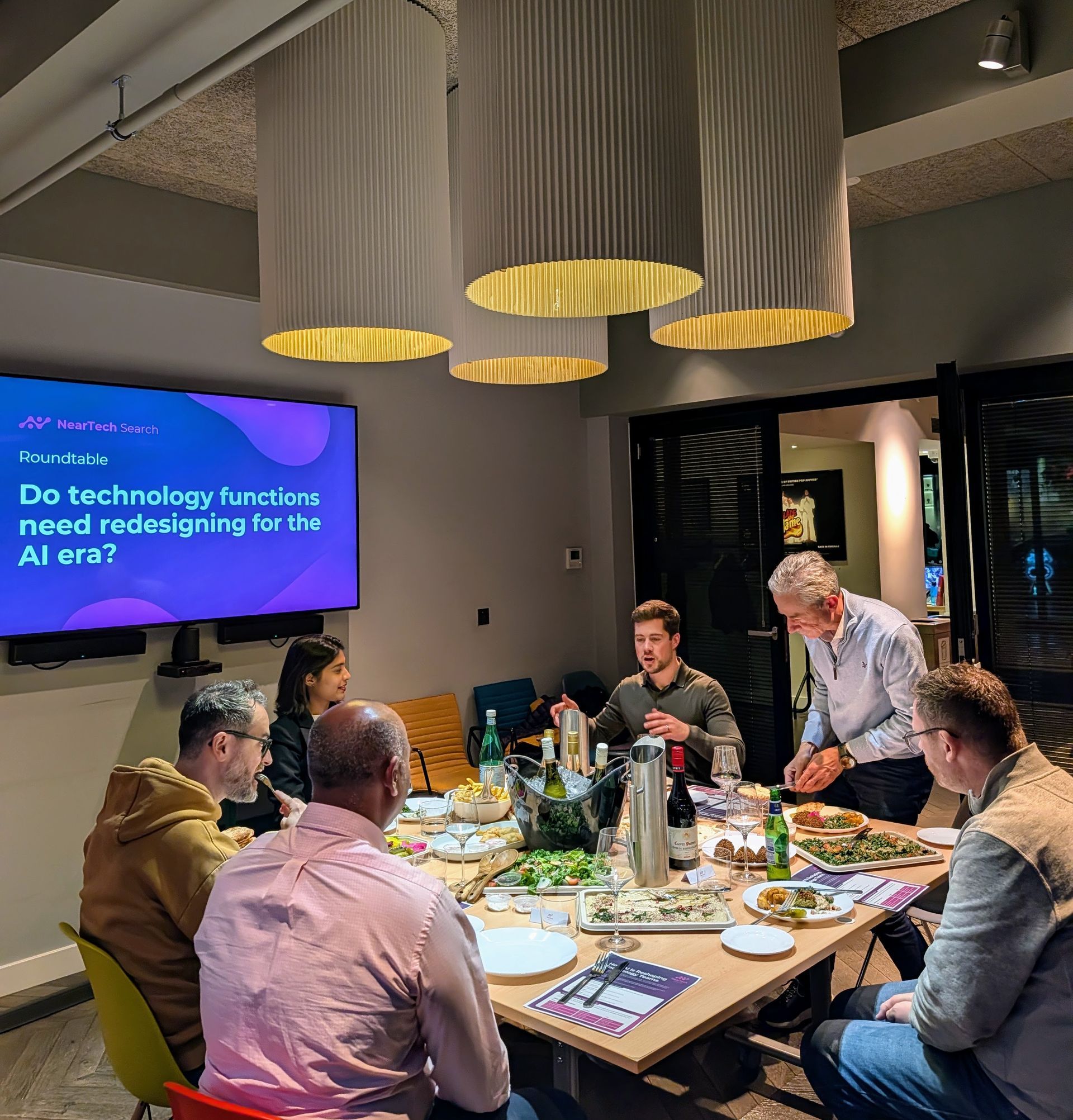
Nine takeaways from our CTO roundtable on whether technology functions need redesigning for AI, from hiring for curiosity to the junior engineer question.

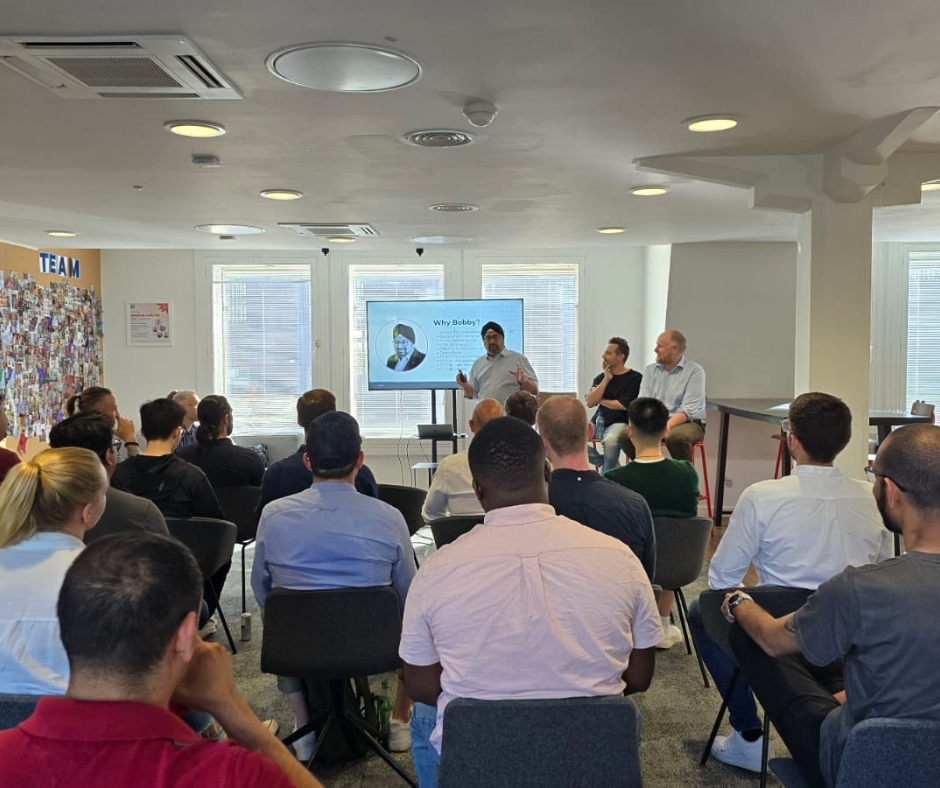
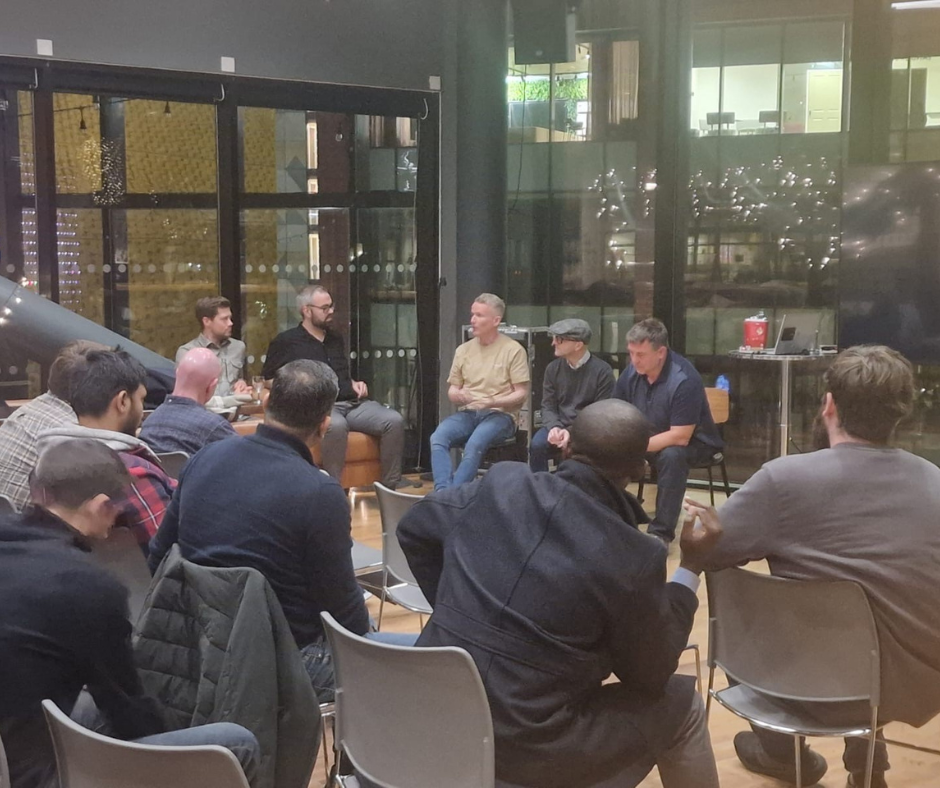
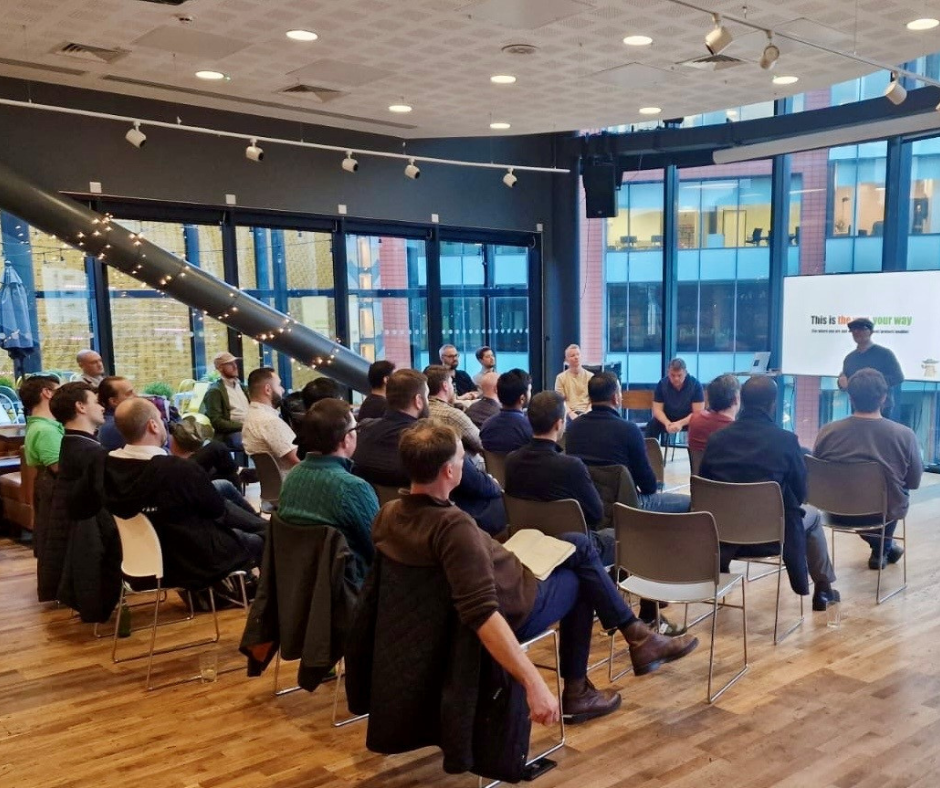
As AI continues to reshape the technology landscape, the pressure on engineering and technology leaders is increasing rapidly. Teams are being asked to move faster, deliver more with fewer resources, modernise platforms, integrate AI responsibly and rethink what high performance looks like in a technology organisation. These themes sat at the centre of NearTech Search’s recent Manchester CTO roundtable, where technology leaders came together to discuss the realities of scaling modern tech teams, platform engineering, AI adoption and the changing expectations placed on leadership teams. What became immediately clear throughout the discussion was that the conversation around scaling has fundamentally changed. The focus is no longer purely on hiring growth. Instead, organisations are thinking more carefully about operational efficiency, AI enablement, engineering effectiveness and how to build adaptable teams capable of navigating continuous technological change. Below are the key themes and insights that were touched on during the event. Scaling Is No Longer Defined by Headcount Growth One of the strongest themes from the evening was that many businesses are actively trying to slow hiring growth rather than accelerate it. For years, scaling technology teams often meant increasing engineering headcount as quickly as possible. However, the discussion highlighted how priorities are changing. Technology leaders are now far more focused on improving output, reducing delivery friction and building smaller teams that can operate more effectively. Several attendees discussed how investor expectations and commercial pressures have pushed businesses to think differently about growth. Rather than simply asking how quickly teams can hire, organisations are increasingly focused on how they can achieve more with the teams already in place. One of the most repeated ideas throughout the discussion was the importance of scaling operationally rather than structurally. Leaders spoke about using AI tooling to remove repetitive workloads, improving platform capabilities and enabling engineers to work across broader parts of the stack more independently. A particularly striking comment from the discussion captured this perfectly: “How do we deliver more with the same team?” This mindset is now influencing everything from hiring strategy to platform investment and engineering team design. Key Takeaway: High-growth technology businesses are increasingly prioritising productivity, operational efficiency and smarter tooling over rapid headcount expansion. AI Is Changing What Strong Technical Talent Looks Like Another major area of discussion centred around AI and how it is already reshaping engineering teams. The conversation moved well beyond whether AI will impact technology roles. The consensus in the room was that the impact is already happening. Interestingly, the discussion was not centred around replacing engineers. Instead, attendees focused on how AI is changing the shape of technical capability and what businesses now value most in engineering teams. Several leaders discussed how specialist roles are becoming broader, with adaptability and full-stack capability becoming increasingly valuable. The ability to learn quickly, apply judgement and understand wider business context was repeatedly highlighted as more important than narrow technical expertise alone. One CTO explained that their organisation is increasingly hiring for attitude over aptitude. The reasoning behind this was simple, technical skills can be taught. Curiosity and adaptability cannot. Several attendees also discussed how AI tooling is helping developers deliver faster, prototype more independently and reduce repetitive development tasks. However, there was strong agreement that the best engineers are still those who understand business context, apply sound judgement, solve problems effectively and recognise when AI-generated outputs are incorrect. One of the clearest conclusions from the evening was that AI amplifies strong engineers far more than it replaces them. Key Takeaway: Businesses are increasingly prioritising adaptable, commercially aware engineers who can work effectively alongside AI rather than relying purely on narrow technical specialisation. The Bigger Challenge Is Cultural, Not Technical One of the most interesting discussions throughout the evening focused less on the technology itself and more on the human response to it. Several CTOs spoke openly about the emotional and cultural challenges surrounding AI adoption within engineering teams. Attendees discussed engineers feeling uncertain about how their roles may change, concerned that years of specialist expertise could become less valuable, or hesitant about integrating AI into their workflows. This was particularly noticeable amongst highly experienced professionals who had spent years mastering specific technologies or disciplines. One attendee summarised the sentiment clearly: “Some people feel like this technology is devaluing the years they invested into their craft.” The businesses seeing the strongest progress were not necessarily those with the most advanced tooling. Instead, they were the organisations creating environments where experimentation felt safe, learning was encouraged, and conversations around AI remained transparent. There was strong agreement that organisations cannot simply mandate AI adoption. Leaders must actively support teams through the process and create cultures where continuous learning becomes part of day-to-day operations. Key Takeaway: Successful AI adoption is becoming as much a leadership and culture challenge as it is a technology challenge. Platform Teams Are Becoming Strategic Enablers Platform engineering and DevOps functions were another major focus throughout the discussion. What became clear is that platform teams are no longer viewed purely as infrastructure support functions. Instead, they are increasingly becoming strategic enablers across the wider engineering organisation. Technology leaders discussed how platform teams are helping businesses scale more effectively by improving developer experience, building reusable tooling, introducing governance guardrails, and enabling teams to move faster without compromising quality or security. One CTO described platform engineering as: “A force multiplier for the organisation.” Conversations throughout the evening touched on internal AI tooling, automated testing, governance layers, secure AI gateways, and AI-assisted migrations. Importantly, the focus was not purely on cost reduction. Instead, businesses are concentrating on how platform functions can remove operational friction and create more efficient delivery environments across multiple teams. Key Takeaway: Platform and DevOps teams are increasingly becoming central to enabling scalability, developer productivity, and faster delivery across engineering organisations. Expectations on Technology Leaders Have Increased Significantly Another clear takeaway from the roundtable was that the expectations placed on CTOs and technology leaders have expanded dramatically. Today’s technology leaders are not only expected to oversee engineering delivery. They are also responsible for understanding emerging AI tooling, driving experimentation, educating the wider business, assessing commercial impact, and balancing governance with innovation. One attendee captured this by saying: “The CTO role feels reinvigorated again.” There was a strong feeling throughout the room that technology leadership has moved back to the centre of business strategy. However, with that comes increasing pressure. Leaders are now expected to answer difficult questions around AI strategy, automation priorities, delivery speed, and long-term organisational direction. Several attendees also referenced growing levels of “change fatigue” across organisations as teams attempt to keep pace with the speed of technological advancement. Key Takeaway: Technology leaders are increasingly expected to combine technical expertise with commercial thinking, organisational leadership, and AI strategy. The Businesses Moving Fastest Are Creating Cultures of Experimentation One of the final themes throughout the evening was that the businesses progressing fastest are not necessarily those with the biggest budgets or largest engineering teams. Instead, they are the organisations creating environments where experimentation is encouraged, learning is shared openly, and teams feel empowered to test and adapt quickly. Attendees discussed internal AI workshops, shared prompting sessions, developer-led learning initiatives, and cross-functional experimentation as examples of what this looks like in practice. In contrast, businesses struggling most with adoption were often those where AI usage remained hidden, governance lacked clarity, or teams feared making mistakes. One of the clearest takeaways from the discussion was that AI adoption is becoming just as much a culture challenge as it is a technology challenge. Key Takeaway: The organisations adopting AI most successfully are creating cultures that encourage experimentation, continuous learning, and transparent collaboration. Final Thoughts The Manchester CTO roundtable highlighted just how quickly expectations on technology teams are changing. Scaling modern engineering organisations is no longer purely about hiring growth. It is about building adaptable teams, improving operational efficiency, enabling experimentation, and helping engineers work more effectively through stronger platforms and smarter tooling. At the same time, technology leaders are balancing increasing commercial pressure, organisational uncertainty, governance requirements, and the rapid pace of AI adoption. What became clear throughout the evening is that the organisations progressing fastest are not necessarily the ones with the largest teams or biggest budgets. They are the businesses creating cultures that support learning, experimentation, adaptability, and continuous improvement. At NearTech Search, we continue to work closely with technology businesses navigating these challenges, helping them build high-performing teams across engineering, platform, DevOps, AI, and technology leadership functions. Looking to scale your technology team or strengthen your platform and AI capability? Get in touch with us to explore how we can support your growth journey.

The path to becoming a Chief Technology Officer (CTO) is more than just technical, it’s a strategic evolution. A great CTO is equal parts visionary, technologist, and leader. Whether you’re an early-career developer or a senior engineer aspiring for the C-suite, this guide offers a step-by-step framework to build the skills, experience, and mindset needed to get there. 1. Gain Broad Technical Experience Early Early in your career, it’s vital to explore a variety of technical roles. Whether you're a software engineer, network specialist, or cybersecurity analyst, hands-on experience builds the credibility you’ll need later. CTOs are expected to understand the technical landscape inside and out, and cloud computing, DevOps, data pipelines, cybersecurity, and scalable architecture are all part of the job. It’s also important to work across different industries or product types if possible. Exposure to both startup and corporate environments helps you develop problem-solving agility. Remember, you’re not just becoming a tech expert, you’re learning how tech drives value in different business models. 2. Develop Your Leadership and Communications Skills One of the biggest misconceptions is that CTOs only need technical skills. In reality, leadership, communication, and collaboration are essential. CTOs frequently report to the CEO and board, translate complex technical ideas into strategic language, and manage large engineering teams. As Matt Watson notes in his LinkedIn piece, learning to manage people, communicate goals, and resolve conflicts is where many engineers struggle when stepping into leadership. Start by taking on Tech Lead or Engineering Manager positions, where you can learn how to lead without losing your technical edge. Additionally, experience in cross-functional teams, such as working with Product, Marketing, and Sales, helps you understand how technology intersects with every part of the business. This is the foundation of the strategic thinking required of any successful CTO. 3. Take On Strategic Roles That Push You Beyond Code Once you’ve built a foundation in leadership, it’s time to move into strategic positions like Director of Technology, VP of Engineering, or Technical Co-founder. These roles offer the opportunity to influence product vision, define technical roadmaps, and make key architectural decisions. At this stage, you're expected to think several quarters or years ahead. You're not just solving today's problems; you’re preparing for tomorrow’s scale, risk, and innovation. As TechCXO suggests, CTOs must shift from operational tasks to strategic execution, aligning technical goals with business objectives. Whether you work in a startup or a scaled business, getting comfortable with budgets, vendor relationships, hiring, and resource planning will shape your readiness for C-level leadership. 4. Embrace Visionary Thinking and Market Awareness Great CTOs aren’t just technical leaders; they’re visionaries. They anticipate trends, stay ahead of innovation curves, and ensure their company isn’t reacting to change, but driving it. This involves developing a deep understanding of industry trends, customer behaviour, competitive threats, regulatory shifts, and emerging technologies. According to Maryville University , today’s CTOs are at the forefront of AI integration, blockchain, cloud architecture, and cybersecurity. You’ll need to evaluate technologies, advocate for innovation, and justify investment decisions in terms that your CFO and CEO understand. To succeed here, regularly attend industry events, contribute to tech strategy conversations, and read business journals alongside technical documentation. Your job is to bridge both worlds and do it convincingly. 5. Invest in Executive Education and Mentorship By now, your technical expertise and leadership experience are strong. But stepping into the CTO role often requires executive-level polish. This includes understanding governance, risk, funding, boardroom communication, and long-term corporate strategy. Pursuing an Executive MBA or leadership certification (e.g., from Wharton, INSEAD, or Kellogg) can help you refine this skill set. These programs train leaders in decision-making under uncertainty, crisis management, and stakeholder engagement. Equally important is finding a mentor a CTO or CEO who’s walked the path. As highlighted by Medium , mentoring relationships provide valuable insight, honest feedback, and career guidance that no course can replicate. 6. Step into the Role and Keep Evolving Landing your first CTO role is a career milestone, but the real work begins after you get the title. The modern CTO is expected to be a culture leader, a strategic advisor, and a technology evangelist. Your responsibilities will likely include: Defining and communicating a long-term technical vision Leading and scaling engineering teams with empathy and precision Overseeing security, compliance, and technical debt management Evaluating new tech stacks and tools without disrupting business continuity According to LinkedIn’s CTO career reflections , many CTOs eventually evolve into advisory roles, startup investors, or even founders. The skills you’ve acquired will open doors far beyond traditional tech departments. But no matter how high you go, the key is this: stay curious. The best CTOs are lifelong learners, always evolving with the industry, their teams, and themselves. Why It Matters: NearTech Search’s Perspective At NearTech Search, we understand that building an exceptional tech leadership team isn’t about ticking boxes, it’s about finding professionals with the right balance of vision, execution, and empathy. Whether you're a candidate on the rise or a business in search of your next CTO, our expert recruiters are here to guide the process. We don’t just place leaders, we help build them. Ready to Take the Next Step? If you're a senior engineer planning your future, or a company looking for the perfect CTO to lead your team, NearTech Search is ready to support you.